CLIMATE FIRE INFO
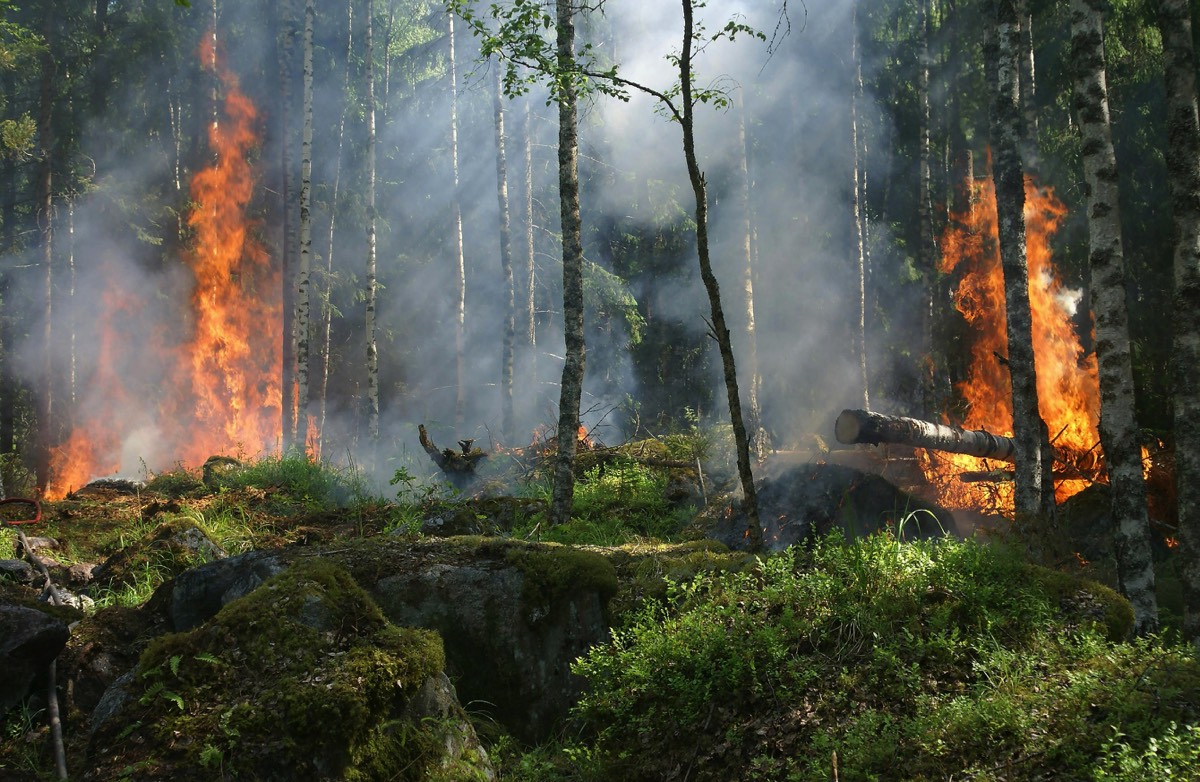
Other regions of the U.S. have already learned many lessons about how to manage, prevent, and mitigate damage from wildfires that result from increasingly dryer and hotter conditions. Here are some resources for Dalton residents to consider as we face the same escalation of fire risk. Topics covered here include:
- Activities to Avoid During Dry, Hot, and Red Flag Periods
- Creating Defensible Space Around Your Home
- Additional Preparation and Precautions
Activities to Avoid During Dry, Hot, or Red Flag Periods
A majority (some 85%) of destructive wildfires across the U.S. have been the result of folks making irresponsible or uninformed decisions. Here's what to avoid during periods of extended drought and high temperatures — even when an official Red Flag warning hasn't been issued:
You can read more information about human causes of wildfire here.
A majority (some 85%) of destructive wildfires across the U.S. have been the result of folks making irresponsible or uninformed decisions. Here's what to avoid during periods of extended drought and high temperatures — even when an official Red Flag warning hasn't been issued:
- Don't toss lit cigarettes anywhere outside — and especially not out of a moving car window.
- Don't burn anything with an open fire (including in a metal container or dug pit) in your yard.
- Don't build a campfire — and if you come across one that is left unattended, put it out completely.
- Be extremely cautious using equipment with combustion engines around dry vegetation or other fuel sources (which hot tailpipes, equipment malfunctions, mechanical sparks, etc. can ignite)
You can read more information about human causes of wildfire here.
Creating Defensible Space Around Your Home
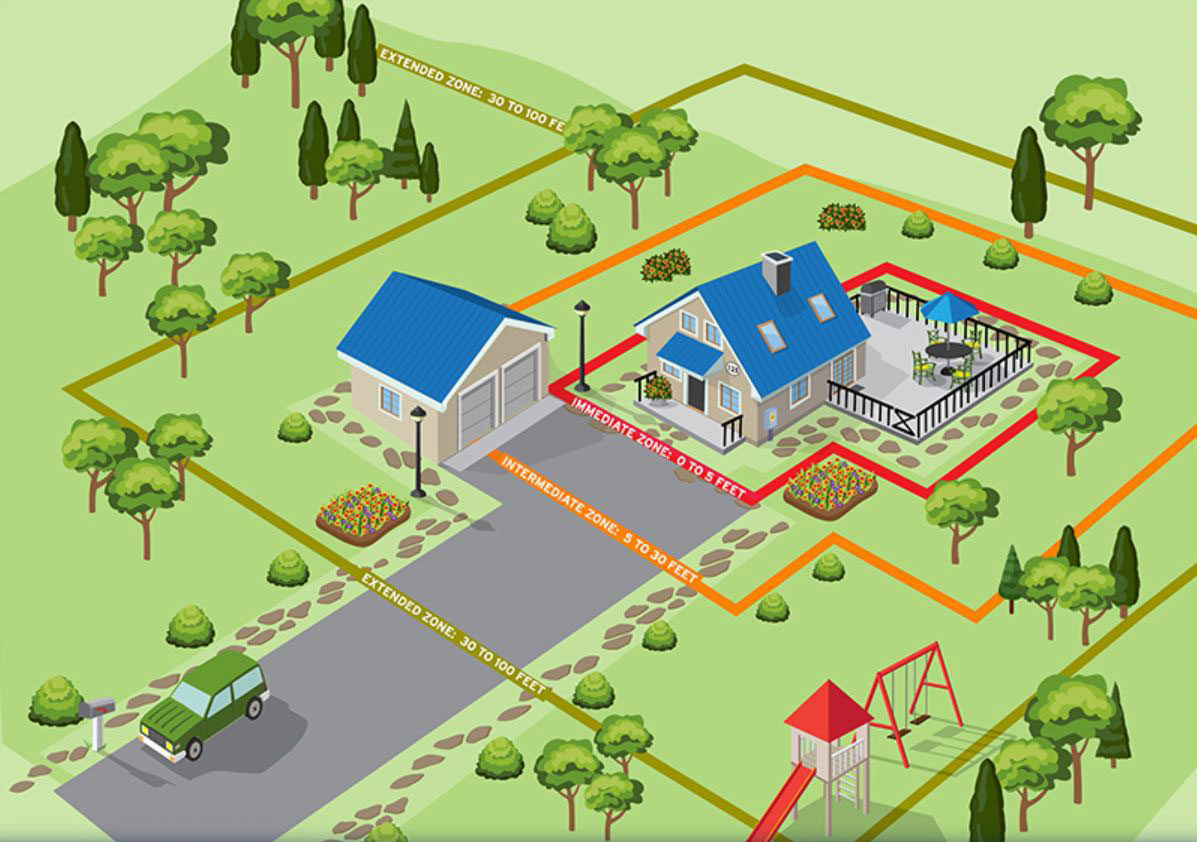
- The National Fire Protection Association recommends a defensible space—free of leaves, debris, or other flammable materials—of up to 200 feet from a structure.
- Zone 0) "Immediate Zone" hardened against fire — remove ALL vegetation and combustible materials, replacing with hardscape, non-combustible mulch, etc..
- Zone 1) A minimum 30-foot space (some regulations may indicate 50 feet). Clear combustible materials; replace flammable vegetation; prune branches and shrubs to create a minimum distance of 15 feet of these combustibles from the structure, from the ground, and between trees.
- Zone 2) 30-100 feet out. Replace flammable vegetation, create “fuel breaks” such as driveways and gravel walkways; prune lowest trees limbs 6 to 10 feet from the ground.
- Zone 3) 100-200 feet out. Remove underbrush and thin vegetation, ensure that firewood is placed at least 100 feet away from structure, and keep tall trees from creating touching canopies.
Info above derived from FEMA and other state or local governmental sources. Read the full FEMA recommendations here. Image from https://www.firesafesonoma.org/defensible-space/
Additional Preparation and Precautions
- Identify and maintain water sources, such as hydrants, ponds, swimming pools, and wells and ensure they are accessible to the fire department.
- Have a hose that can reach any area of your property.
- Install metal 1/8-inch wire mesh in ALL attic vents (soffit, gable, dormer, etc.) to prevent wildfire embers, which can travel very long distances, from being sucked into your attic. Read more about the risks of these wind-blown embers here. Anything larger than 1/8-inch (even 1/4-inch mesh) can still allow embers into your attic. You can read more about this here.
- Don’t store combustible materials, such as paper, clothing, etc., in the attic or crawl space.
- For our own personal health, and the health of loved ones, it is also important to monitor air quality during wildfires. When smoke causes concentrations of PM 2.5 particulates to rise to unsafe levels, it is critical to close our homes to outside air, wear a snug N95 mask when outside, and avoid outdoor strenuous activities until the smoke clears. You can read more about wildfire smoke health impacts here, and about ways to mitigate those risks here.

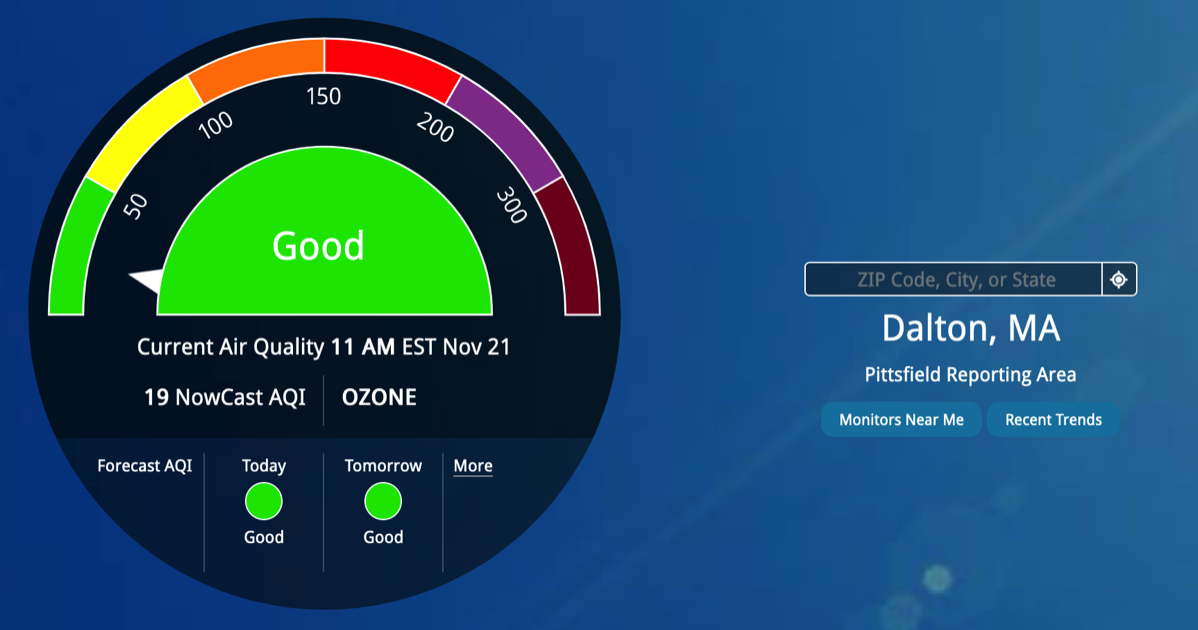
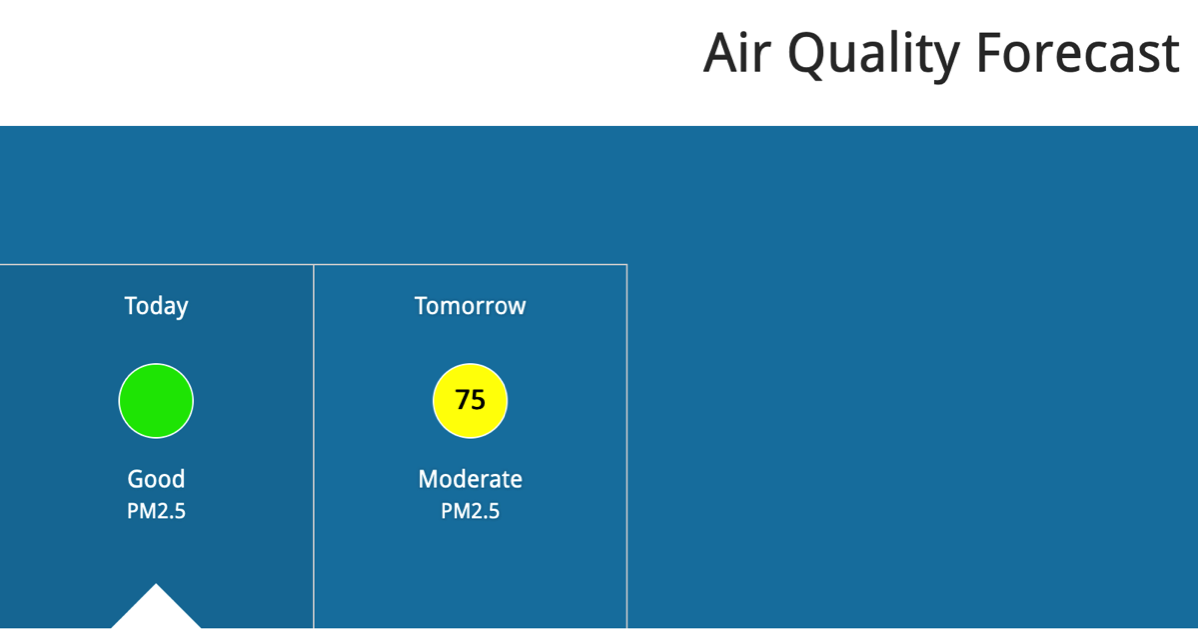
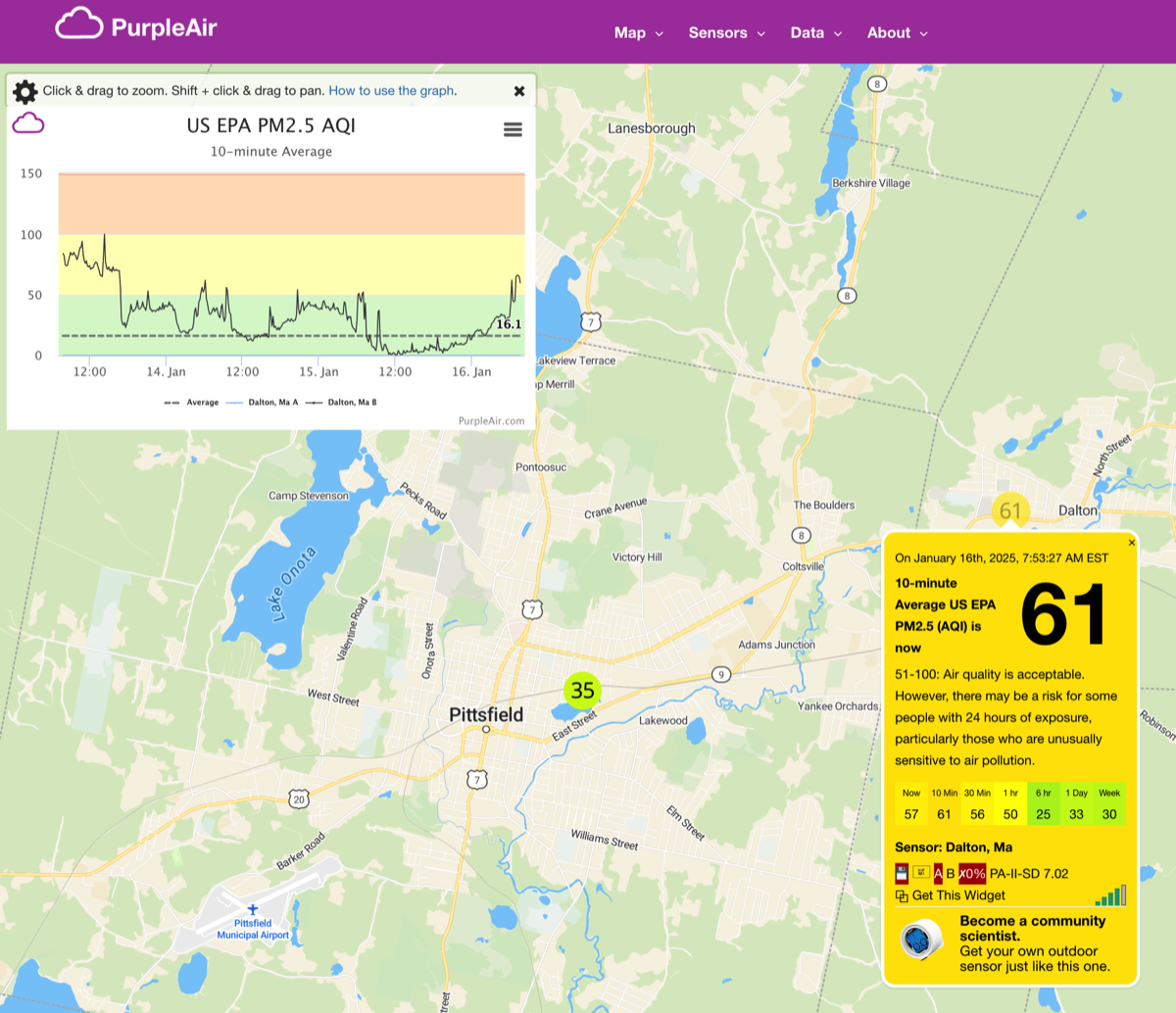
Check local air quality at airnow.gov (pictured on the left), or, for more detailed information about Dalton and Pittsfield, check this PurpleAir map (pictured above) or this Airgradient map.
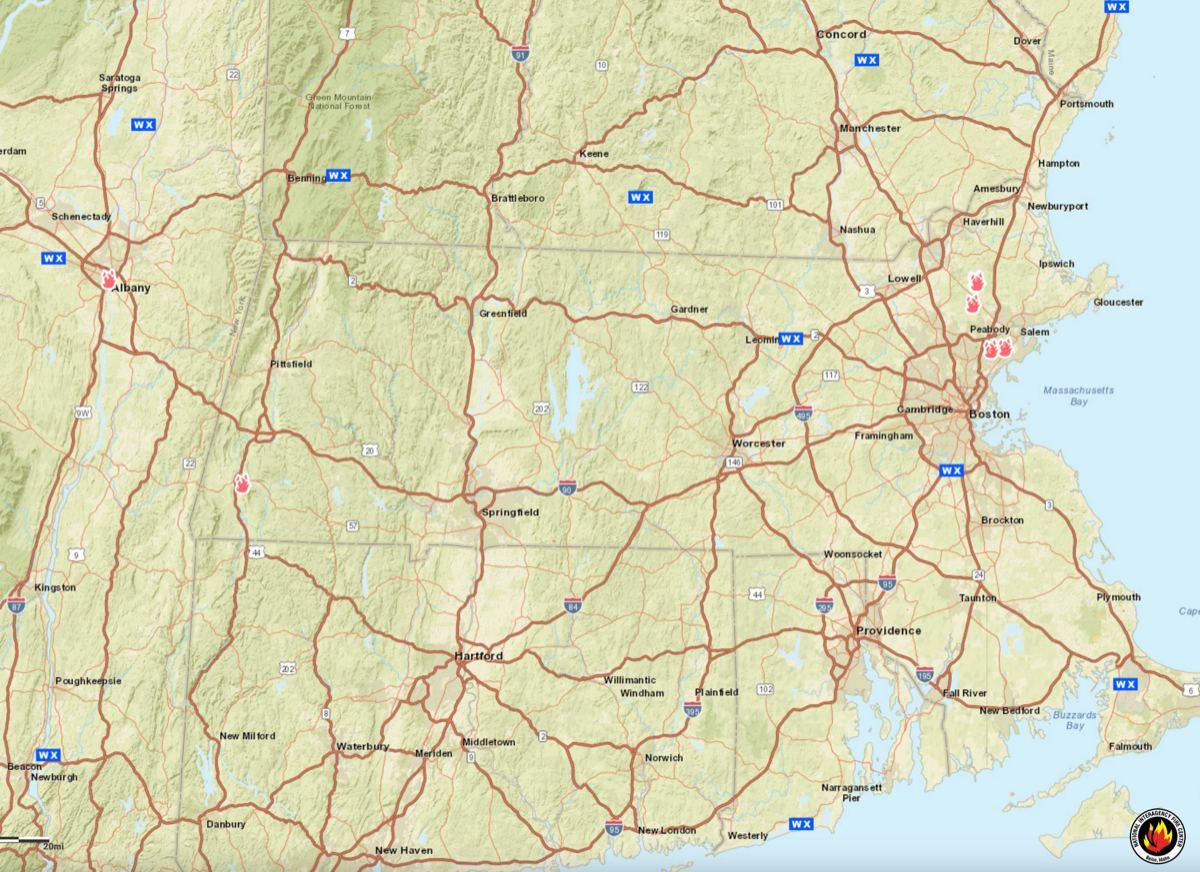
For a regional active fires map, click here.
(Please note: this map may take a few seconds to fully load.)